
About Us
Our Grip On God’s Word
the History
While the presence of Lutheran Churches in Oconomowoc was fairly well established and rooted by the early 1970’s by the larger Lutheran Synods of America, there was no church in the area from the Lutheran Church in America (LCA). Through the vision of the Mission Board of the Lutheran Church in America, land was purchased in 1975 at Lord of Life’s present location on the northeast corner of Cty. Roads P & Z.
Thus, a small Lutheran Church on the northeast side of Oconomowoc was poised to strengthen it’s grip on the truth of God’s Word and the certainty of salvation and share it with the surrounding community. Because of Lord of Life’s grip on the truth of God’s Word, the congregation united around these foundational beliefs of Holy Scripture on which confessional Lutherans stand: “By Grace Alone, By Faith Alone, By Scripture Alone.”
Not long after Lord of Life’s 10th anniversary on April 5, 1987, this congregation joined the Evangelical Lutheran Church in America (ELCA) in 1988. The decision was later made, and we currently are, a member of the NALC, North American Lutheran Church.
Hear From Pastor Mike
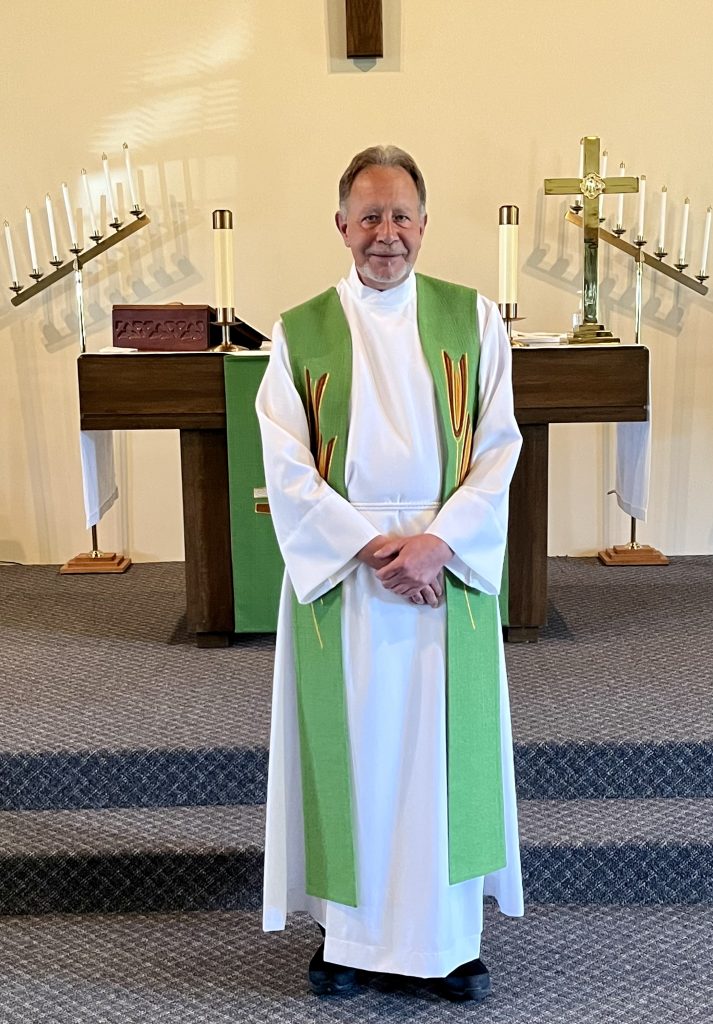
August 2026
“And afterward, I will pour out my Spirit on all people. Your sons and daughters willprophesy, your old men will dream dreams, your young men will see visions.”
— Joel 2:28
When we think of the word “prophet” in our day and age, we usually think of someone who predicts events that haven’t happened yet. Indeed, one of the definitions of prophet in the Oxford dictionary is “a person who claims to know what will happen in the future.” However, people who champion a major social cause or movement are frequently described as prophetic voices of their time. Others use the word loosely to describe experts who accurately predict future technology, economic trends, or cultural shifts. So, in its modern sense, a person might be a “prophet” without any connection to God.
This is not a prophet in the Biblical sense of the word. In Scripture, a prophet is a person sent by God to teach the people and give them messages from the Lord. Their words may entail predictions of future events but not necessarily. Biblical prophets are men and women who said what God wanted people to hear, sometimes about their future, but always about their present circumstances. Hence, a true prophet is recognized by two characteristics:
1. They must be sent by God
2. They must speak a truth that God wants people to hear.
Here is a “pop quiz” even I could not answer: “Who is the first person in the Bible to be called a prophet?” My answer would have been Joseph or Samuel. But it was Abraham, the father of Israel and, the father of all who hold the faith. Way back in Genesis 20:7, God warned King Abimelech after he had taken Sarah into harem to “return the man’s (Abraham) wife, for he is a prophet, and he will pray for you, and you will live.” One of the most important ways Abraham showed himself to be a prophet was his role of interceding on behalf of others. Abraham pleaded for Sodom and Gomorrah before its ultimate destruction. And he prayed on behalf of Abimelech’s household.
There are other ways that Abraham proved himself to be a prophet. When he left his home in Ur, he showed his willingness to break ties with his past at God’s command. Like other Biblical prophets, he went against the status quo. After God gave the covenant of circumcision to him, he “preached” it to his household and had all the males circumcised. Finally, his primary role as a prophet lay in teaching his household and others about God’s will and moral ways in a polytheistic world. Yes, God occasionally gave Abraham foresight into the future. In Genesis 15:13, He warned Abraham that his descendants would be enslaved by the Egyptians for 400 years, an event that occurred centuries later. But for the most part Abraham’s prophetic role was one of “forthtelling” as opposed to “foretelling.”
As we come to the last leg of our summer series on the prophets, this question may have occurred to you; “Is the gift of prophecy still alive and well within the church?” I am open to that possibility, but I have never come across anyone who meets the criteria of a prophet in the modern sense. Nor do I need to. The book of Hebrews opens with these words, “In the past God spoke to our ancestors through the prophets at many times and in various ways, but in these last days he has spoken to us by his Son.” Everyone who believes and proclaims the words of Jesus is a prophet in the Biblical sense, whether a pastor, professor or parent. It would be wonderful to have the gift of prophecy, but of all the titles Abraham held (“prophet,” “father of many nations,” “patriarch”), the one I envy the most is “friend of God” (Isaiah 41:8). It would seem that is where all true prophecy begins.
Your servant in Christ,
Pastor Mike
June 2026
“Above all, you must understand that no prophecy of Scripture came about by the prophet’s own interpretation of things. For prophecy never had its origin in the human will, but prophets, though human, spoke from God as they were carried along by the Holy Spirit.” — 2 Peter 1:20-21
One of the things we tend to forget is that the early church did not have the Bible as we know it. The Hebrew Bible (what we call the Old Testament) was all the Scripture they had available to them. When the Christian Church was in its infant stage, the New Testament was still being written. Most of these seedling churches did not have the written Gospels nor the letters of the Apostles available to them.
But they did have the books of the Prophets! In addition to the Law of Moses and the historical and poetical books, they had the insights of a holy group of men who gave both warning and comfort to the people of Israel over the course of centuries. While we often think of prophecy as a prediction about the future, Biblical prophecy covers a wider scope than this. The prophets of the Bible were carriers of a message from the Lord, whether present or future oriented. In this sense, every Christian who faithfully proclaims the revealed Word of God is a prophet!
In his final days before facing martyrdom under Emperor Nero, the Apostle Peter wrote an urgent letter to the early church. He knew his time was short, and he knew that false teachers were actively trying to distort the gospel message. To protect the believers, Peter did not point to his own credentials, mystical experiences, or clever arguments. Instead, he pointed them directly to the ultimate anchor: the written Word of God. In his sermon on the day of Pentecost, Peter referred to Old Testament prophecies three different times. He wanted to assure his hearers that the message he was preaching was not some innovation or novelty, but found its roots is the Scriptures that were read in the synagogue every week. His emphasis was to assure his audience that Jesus was the long-awaited Messiah who had been promised in centuries past.
During the next three months, I will be preaching from the books of these prophets. Some are named Major prophets, while some are called Minor (you’ll have to worship with us to find out what makes the difference!). These prophets have been long-dead and buried, but their message still holds meaning in the 21st century. That because they are the truth of God written down for the ages. Peter reminds us that the Bible is not a product of human imagination. The Holy Spirit carried along the biblical authors so that they spoke the very words of God. This divine origin gives us an anchor of absolute truth and unwavering hope. It is easy to look at the world around us and feel overwhelmed by shifting cultural values or personal doubts. In these moments, we can turn to the pages of Scripture with absolute confidence. The Bible is not a collection of clever myths or merely one person’s opinion; it is the divinely inspired message of the Creator.
The imagery used in verse 21 above is beautiful and striking. The phrase “carried along by the Holy Spirit” paints a picture of a sailboat being propelled across the water by the wind. While the human authors used their own personalities, cultures, and writing styles, they were entirely guided and empowered by the Holy Spirit to record exactly what God wanted us to know. The prophets held the pen (or more likely a reed) but the Holy Spirit provided the words. They did not make educated guesses based on the “sign of the times;” they were inspired to declare God’s words for all times.
Earlier in this chapter, Peter compares the prophetic word to a “lamp shining in a dark place, until the day dawns and the morning star rises in your hearts.” This serves as a daily encouragement for us. The world can be a dark and weary place, but God has given us His living, breathing Word to light our path and point us to the ultimate Morning Star—Jesus Christ. Jesus is both the Center and the Key to all Biblical prophecy. So, for the next few months, let us sit at the feet of these great prophets and listen to the message for all ages!
Your servant in Christ,
Pastor Mike
May 2026
“And remember, I am with you always, to the end of the age.” – Matthew 28:20
Most of us have heard the expression, “In this world, nothing is certain but death and taxes.” It was Benjamin Franklin who made this quip after the US Constitution had been established. While this was said in a tongue-in-cheek fashion, there is some truth in it. Its biggest flaw is what it omits. One other thing is certain: Jesus was, is and will be with us until life on this planet as we know it comes to an end.
Matthew frames his Gospel in a very interesting way. Even in his opening chapter, Joseph is informed that his fiancé will have a son and they will call Him Emmanuel, which means “God with us.” The verse at the top of this page are the final words in Matthew’s Gospel. It means Christ’s active presence dwells within believers through the Holy Spirit. It is a promise of constant companionship, strength, and security, ensuring we are never abandoned, regardless of life’s challenges or the tasks we face. Matthew frames his entire message, start to finish, with the comfort that God is always with us.
Have you ever felt alone in a crowd? Or do you feel on your own even when you are surrounded by family and friends? The good news is Jesus has your back. This is not a vague promise. In the original Greek text, the “I” is emphatic. No one less than Jesus himself pledges His Presence to us. And “always” literally means “all the days”—the good days, the bad days, the busy days, and the quiet days. It is a promise of constant companionship, strength, and security, ensuring we are never abandoned, regardless of life’s challenges or the tasks we face.
We are blessed at Lord of Life with having the presence of Christ with us in two distinct ways. One is at Lord’s Supper, where the true body and blood of Christ are not only present among us under the elements of bread and wine, but actually becomes a part of us through our reception of those elements in faith. Along with Paul, we can rightly say, “Christ lives within me” (Galatians 2:20).
Secondly, Jesus remains with us always as we continue to show love and concern for one another. That is why He created the church. We are more than just a group of people who decide to get together every Sunday for social purposes. We are meant to be the eyes, ears, hands, arms and legs of Jesus Christ until He returns in his glory. Through the power of the Holy Spirit, we are meant to heal like Jesus healed, speak like Jesus spoke and love like Jesus loved. Of course, we can never do this as perfectly as our Lord. But how our week would change if we truly lived this way! Perhaps we would speak with more courage and love with more abandon.
The people of God have always known that He is with them through thick and thin. As I prepared this short devotional, I was reminded of those famous words by King David, spoken at every Christian funeral: “Yea, though I walk through the valley of the shadow of death, I will fear no evil; for Thou art with me.” When he triumphed over Goliath, David knew God was with him. When he repented of his sin with Bathsheba, God was with him. When his own son rebelled against him and he was forced to leave Jerusalem, God was with him. Whatever season of life you are in, you are not walking alone. You aren’t even walking it by your own strength. The King of Glory is your constant companion, today and every day until the finish line!
Your servant in Christ,
Pastor Mike
April 2026
Pilate asked, “What is truth? — John 18:38
Good question, Governor Pilate.
If you have known me for any length of time, you know I am a man in search of the truth. My interest in philosophy is not because I love to hear people ramble through 800 pages about conclusions that could be summed up in three sentences. I am more like a prospector, looking for nuggets of truth in a riverbed of sand. Even the most ardent of skeptics can speak truth with clarifying candor. One of my favorite theologians, A.W. Tozer, once asked a fellow pastor whether there was any benefit in reading secular literature. He replied, “Young man, a bee can find nectar in the weed as well as in the flower.”
Pilate’s question regarding truth has puzzled theologians throughout the centuries. Because written words cannot express the tone, we do not know if he was being sarcastic or reflective. Either way, it stands as a valid question, especially in 2026. A recent Barna Research Study asked people, “Is there absolute Truth?” 66% of respondents chose this answer: “There is no such thing as absolute truth; different people can define truth in conflicting ways and still be correct.” Apparently, philosophy, logic, and laws of nature are no longer valid. I am looking forward to meeting the person that does not believe the rate of gravity on earth is 32.2 feet per second squared.
Context is important. Pilate’s question was a response to something Jesus had said: “Everyone on the side of truth listens to me.” It seems that Pilate took our Lord’s words to heart. His next words were to the crowd: ““I find no evidence of a crime in this man.” It was a truth that the crowd did not want to hear. We know the result.
As Christians, we sometimes confess truths the world does not want to hear. We preach that all people are sinners in need of a Savior. We proclaim a Messiah who gave His life as a sacrifice for our sins. We believe that three days after His execution, He came back from the dead. The Apostle Paul spoke the truth when he wrote, “We preach Christ crucified: a stumbling block to Jews and foolishness to Gentiles.” Yet, it is this truth upon which the Church stands or falls. And the fate of every human soul rests in its response to this truth.
The early church (as shown in the Bible) met on Sundays because they felt every worship should be a celebration of the Resurrection. To put it another way, every Sunday was Easter for them. It was known as “The Lord’s Day.” When we gather on Sunday morning as the children of God, we stand as witnesses to the historical fact that Jesus rose on the first day of the week. Truth is not a concept; truth is a Person, arisen and ever alive! He is the only One who could truthfully say, “I am the way and the truth and the life. No one comes to the Father except through me” (John 18:6).
Winston Churchill once said about his adversary Prime Minister Stanley Baldwin, “He occasionally had stumbled over the truth, but hastily picked himself up and hurried on as if nothing had happened.” Such was the fate of Pilate. He wanted to know what truth was when the truth was standing before his very eyes. His fatal mistake echoes through the hallways of history, making the name “Pontius Pilate” forever infamous. God preserves us from making the same mistake!
Your servant in Christ,
Pastor Mike
March 2026
“He was oppressed and afflicted, yet He did not open his mouth; He was led like a lamb to the slaughter, and as a sheep before its shearers is silent, so He did not open His mouth.”
—Isaiah 53:7
When it comes to sins of the tongue, we often think of the obvious ones: cursing, gossip, lies. Two of the Ten commandments (the 2nd and the 8th) deal directly with sins of speech. The tongue was created for good things like tasting food, singing hymns and proclaiming the Gospel. But along with the rest of creation, it can be turned toward the negative. The Apostle James gives us a fine and colorful admonition in the 3rd chapter of his epistle:
“All kinds of animals, birds, reptiles and sea creatures are being tamed and have been tamed by mankind, but no human being can tame the tongue. It is a restless evil, full of deadly poison. With the tongue we praise our Lord and Father, and with it we curse human beings, who have been made in God’s likeness. Out of the same mouth come praise and cursing. My brothers and sisters, this should not be.”
I like to think of the tongue as a faucet, a conduit for the refreshingly cool or the dangerously hot.
.
Jesus is the only person who ever had His tongue under complete control. Not only did He know when to speak but also what to say. One of the sins of the tongue we rarely think about is the “excessiveness of words.” Proverbs 10:19 states, “Sin is not ended by multiplying words, but the prudent hold their tongues.” We have frail egos. When we feel we are under attack, we naturally defend ourselves through excuses, explanations, and rationalizations. It is human nature to use a torrent of words when a simple and sincere “I’m sorry” would accomplish so much more.
For the most part, Jesus remained silent before His accusers, both religious and political. When Jesus stood before Pilate, Herod, and the high priests, He was falsely accused, mocked, and beaten. Yet He did not offer a defense to escape the cross. His silence was not a sign of weakness, but one of strength and purpose. But He also knew when to speak up—for the truth! After the High Priest put Him under oath and asked if He was the Messiah, He answered in the affirmative. When Pilate asked if He was King of the Jews, He also answered “Yes.” Men judged His answers as blasphemy and treason. However, Jesus knew that his suffering was the ultimate plan of the Father for the redemption of humanity. He did not speak because he was fulfilling his role as our Passover Lamb, taking upon himself the sins of the world. His submission demonstrates His obedience to the Father and His commitment to pay the price for our peace.
In our world today, the natural response to injustice is to raise our voices. We demand our rights, defend our reputation, and protest unfair treatment. Yet, 700 years before the birth of Christ, the prophet Isaiah painted a profoundly different picture of the Messiah—a picture of silent submission. We are called to follow His example of trusting God during unjust trials. 1 Peter 2:21-23 advises;
“To this you were called, because Christ suffered for you, leaving you an example, that you should follow in His steps. ‘He committed no sin, and no deceit was found in His mouth.’ When they hurled their insults at Him, He did not retaliate; when He suffered, He made no threats. Instead, He entrusted Himself to Him who judges justly.”
Saint Augustine had a marvelously short prayer in this regard: “O Lord, deliver me from this lust of always vindicating myself”. Sometimes, silence can be deafening.
Your servant in Christ,
Pastor Mike
February 2026
“Teach me Your way, Lord, that
I may rely on Your faithfulness.” –Psalm 86:11
As I sit in my nice, warm office (complete with fireplace thanks to the Burants!), the temperature outside is hovering around –11. That is not just cold—with the wind chill, it is deadly cold. There was a time when I appreciated blizzards and sub-zero temperatures, namely, when I was a student. Harsh weather conditions meant a day when I could relax or play at home, instead of sitting at a desk for 8 hours. Even on a day deemed by the adults as too dangerous to travel, I could always survive a walk to my buddy’s house several blocks away.
I am no longer in school, but I am still a student. If you have spent any time at Lord of Life, you have heard me say repeatedly the word “disciple” is not some piece of specialized nomenclature. It simply means “student.” In the ancient world, both philosophers and rabbis had disciples, students who would learn at the feet of their master. In following that tradition, I try to make every worship service at Lord of Life a learning experience, along with the prayers and the praise. Sometimes, that entails reminding people of what they already know. Other times, it is imparting new information.
Our theme for February is “School on the Hill” because that is where Jesus gave some of His greatest lectures on the Kingdom of God. We will be looking at two portions from the Sermon on the Mount. Then we will watch as our Heavenly Father gives us another lesson on the Mount of Transfiguration. Because these events are so well-known to us, it is easy to miss their deeper meaning. That means that we will need to be especially attentive to what God is saying with these familiar words.
Even though I appreciated the “snow days” of my youth, I was also one of those weird kids who liked school. From elementary school to post-graduate work, I was thirsty for knowledge. Apparently, so was King David because he wrote “Teach me Your way, Lord.” The book David had to learn from was the Torah, the first five books of the Bible. This great king knew that God had revealed Himself on those scrolls and he wanted to delve deeper into the mind of the Lord. But that was not the only place David would discover truths. He also learned lessons, sometimes very harsh ones, in what many call the “school of hard knocks.” Life taught him some hard truths. David realized it was not just enough to learn something; we must also live out what we have learned.
As we enter the Lenten season, we too can sit at the feet of our Master and learn new truths. Lent is a time of discipline for what are known as “spiritual exercises.” If you do not already do so, I want to encourage you to give up five minutes of every day in reflecting upon the word of God. An excellent resource in this regard is the “Portals of Prayer” magazine that we have for free in our church narthex (including the large-print ones that are now available through the generosity of one of our members). Each month’s devotions are written by a different author. The current edition has devotions from a pastor’s wife, a now retired pastor Tom Kaul (a friend of mine from seminary), and a professor of music emeritus from Concordia University in Mequon. It is good to hear the Gospel proclaimed through different perspectives and is an important part of growing in knowledge and truth. During grade school, most of us had the same teacher all day long. But when we reached the high school level, we had different teachers for various subjects. Sunday morning worship is a vital lifeline to leading the Christian life. But a short devotion every morning is a daily “infusion.”
Your servant in Christ,
Pastor Mike
January, 2026
“Sing to the LORD a new song,
for He has done marvelous things.”
— Psalm 98:1
I do not think I am different from most folks when I say sometimes I get a song stuck in my head. For me, this often happens at the end of Sunday worship as the final hymn keeps
silently repeating in my mind for the next hour or two. At times, I even find myself humming it out loud. Stranger still is that sometimes I wake up in the morning with a song in my heart. Today, I could not get “Rockin Around the Christmas Tree” out of my head during my morning routine. It is a nice song, but not very Christ-centered.
When a song on the radio is especially catchy or melodic, it is called an “earworm” (no need to consult your physician). Apparently, a lot of music in our church has the same effect. Most of us probably have a favorite hymn; some of us may have a dozen or more. Our hymnal is replete with songs that have stood the test of time, sometimes centuries of time. One of our hymns, “Of the Father’s Love Begotten,” has words that stretch back to the 4th century A.D.! Add to that the fact that portions of our liturgy are based upon verses from the Old Testament, and it is plain to see that music is an important part of the heritage
between the ancient church and the modern one.
In the verse above, the Psalmist tells us that we are to sing a “new song” to the Lord. In this context, the word “new” does not necessarily mean a song or a melody we have never heard before. If I had to write several new songs for every Sunday service, we would be in big trouble. Not to mention, congregational singing would diminish to a low murmur. The idea is that we should be singing the songs we already know with renewed vigor and vitality. In other words, don’t just sing words on a page; put your heart into it! It was Jesus who told us the type of worshippers the Father is looking for: those who worship God in
spirit and truth (John 4:23). Even though we are a small congregation, I love it when we raise our voices in a hymn which is meaningful to many of us. Sometimes, my heart soars when I hear Lord of Life belt out “On Eagle’s Wings!”
The Psalmist also points out the motivation for revitalized emphasis in our singing: the Lord has done marvelous things for us! That means being open to a fresh experience of God’s power and salvation. It also entails keeping our eyes open to the beauty of creation, the resilience of the human spirit and the quiet ways God guides us through uncertain
times. Even in times of war or economic hardship, “Silent Night” can bring peace to the restless soul much like a lullaby sung by a parent to a beloved child.
It is interesting to note that the same word used for “new” song is the same word used for the “new” moon. Obviously, a new moon is not created from scratch every 28 days. We just see it from a new perspective. Let us thank God for our rich repository of music within our Lutheran heritage. May every hymn be a love song dedicated to the God we adore!
Your servant in Christ,
Pastor Mike
Each day of 2026, Let God's face shine upon you!
We Care..........Because You Matter
Lorem ipsum dolor sit amet, consectetur adipiscing elit. Ut elit tellus, luctus nec ullamcorper mattis, pulvinar dapibus leo.